Websites for Tradespeople (2026): What a Plumber or Electrician Actually Needs, and What It Costs a Month

By Nick Croce
It’s ten past seven on a Tuesday. Someone’s boiler has just gone, they’ve typed “gas engineer near me” into their phone, and they’re going to ring the first business that looks real. Not the best one. The first one that looks real, with a number they can tap. That is the entire job of a tradesperson’s website, and most of them fail it.
I’ve built websites for florists, clinics, gyms and law firms, and the trades are the industry where the gap between what people buy and what they need is widest. So this is the guide I’d want a mate who’s a plumber to read: what the site actually has to do, what the UK market charges for one in 2026, and which route makes sense for a sole trader, a crew of four and an established firm. Prices below were checked on 30 October 2026 and will drift.
What a tradesperson’s website is for
One thing. It turns a search into a phone call or a quote request. Everything else, the logo, the colours, the “about us” page, only matters to the extent it makes that call more likely. A site that looks lovely and buries the number is a worse site than an ugly one with a big green button that says Call now.
The person looking is almost always on a phone, often in a hurry, and usually comparing you with two or three others in the same five minutes. Google’s own AI summary for “tradesman website design” lists what wins: clear services, the areas you cover, your contact details on every page, proof of past jobs, reviews and accreditations, and a tappable phone number. That’s the brief. Nothing clever.
The six things it has to have
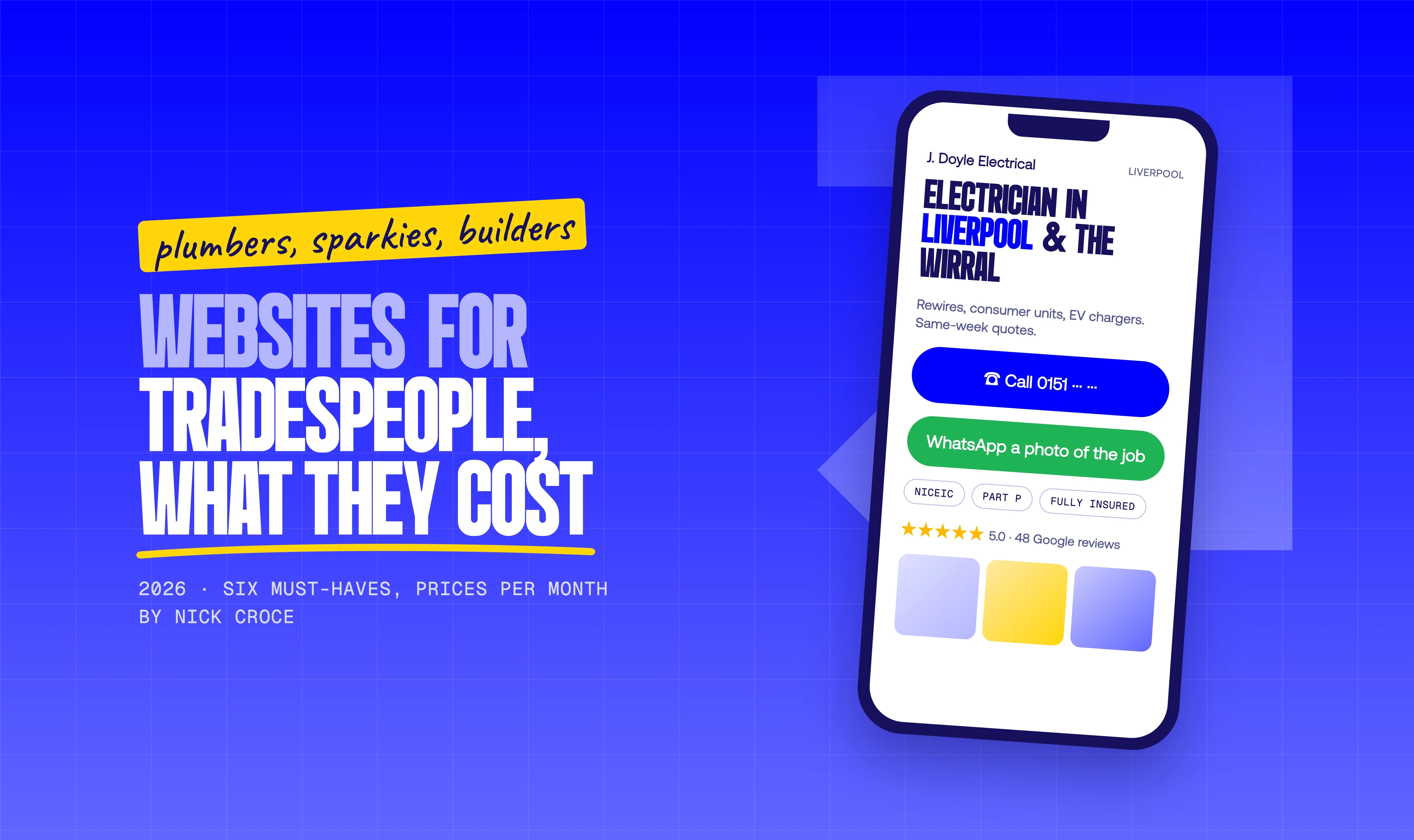
- Your trade and your area in the first line. “Electrician in Liverpool and the Wirral” beats “Welcome to our website” every time. The first sentence is for the person and for Google, in that order.
- A phone number that works with one tap, on every page. Plus WhatsApp if you answer it. On a phone the number should be a button, not a line of text someone has to copy.
- Photos of your own jobs. Not stock. A finished bathroom, a tidy consumer unit, a patio before and after. Homeowners trust a tiled wall they can see over any paragraph you write about quality.
- Reviews and the badges that matter. Google reviews pulled onto the page, and the accreditations your trade runs on: Gas Safe, NICEIC or NAPIT, TrustMark, Checkatrade if you use it. Put the registration number next to the logo.
- The areas you cover, written out. A list of towns is a page Google can rank for each of them. “We cover the North West” is a page it can’t.
- A quote form that takes thirty seconds. Name, phone, postcode, what’s the job, a photo if they want. Five fields, not fifteen. Every extra field loses you someone standing in a flooded kitchen.
What tradesman websites cost in the UK in 2026
The market for trade websites has split into four routes, and the price tags are far enough apart that you should know which one you’re buying before anyone sends a quote. These are real figures from pages that rank for “tradesman website design” in the UK, checked on 30 October 2026, plus my own.
| Route | Upfront | Monthly | Who owns the site | Typical example |
|---|---|---|---|---|
| Build it yourself | £0 | £12 to £17 (Squarespace, paid annually) plus your evenings | You | Squarespace Basic or Core |
| Cheap pay monthly specialist | £0 | £29.99 to £59 | Usually the provider | “Free design, hosting from £29.99 ex VAT”; “get online from £59 a month” |
| One-off build from a trade specialist | £650 to £995 plus VAT | £50 hosting, or “ongoing fees” on top | You, usually | £995 five-page WordPress site plus £50 a month hosting |
| Bespoke build from an agency | £750 to £3,000 and up | Separate hosting and support, often £39 to £149 | You | Quoted per job; “Growth Plan” at £149 a month |
| Managed-For-You (mine) | £0 build fee | From £150, billed as a year up front | Custom-coded site, run for you for as long as you’re on the plan | Build, hosting, domain, security, changes on request, one fee |
Two things jump out of that table. First, the cheap monthly route is cheap because it’s a template with your logo on it, built once and left alone, and on most of those plans the site is theirs, not yours: cancel and it goes dark. Ask any provider in writing what you keep if you leave. Second, the one-off route looks like the honest option and often is, but the price you see is rarely the price you pay. Hosting, updates, the extra area page, the new photos next spring, each one is an invoice or a job you’ll never get round to.
I’ve written a longer piece on how pay monthly websites work in the UK, including the contract catches, if you’re weighing up that end of the market.
Which route suits which business
A sole trader who gets most work from word of mouth and just needs to look real when someone checks: build it yourself on Squarespace, one page, your number at the top, ten photos, your reviews. Two evenings. The Squarespace cost guide has the plan prices and what each one includes. If you can’t face it, the £650 to £995 one-off is the next honest step.
A crew of three to six who want the phone to ring more: this is where the website starts to pay for itself and where the cheap monthly template lets you down, because it can’t rank for “electrician in Warrington” and “electrician in St Helens” at the same time. You need area pages, a job gallery that grows, reviews that update, and somebody to actually do those things every month. That’s the plan I sell, and I’ll be straight about why below.
An established firm with an office and a reputation: a bespoke build at the £3,000 to £8,500 end, with proper branding, and then someone on retainer to keep it current. If you’ve got an office manager who likes the website, Squarespace and a one-off build is fine. If nobody in the building wants to touch it, a managed plan is cheaper than a ninety-minute phone call to an agency every time a price changes.

Why I put tradespeople on a monthly plan, and what it honestly costs
My Managed-For-You plan is from £150 a month, billed annually in advance with a one-year minimum, so the real number is £1,800 for the first year. That’s three times what the cheap monthly providers charge, and I’m not going to pretend otherwise. Here’s what the difference buys.
The site is custom-coded and custom designed, not a template, and the build is included in the fee, so there is no £995 on day one. Hosting, the domain and security are mine to look after. And the part that matters for a trade: changes on request. You win a big job in a new town, I add the area page. You finish a kitchen you’re proud of, you send me the photos from the van and they’re on the site that week. A new Google review comes in, it goes up. The site gets better every month instead of quietly going out of date, and you never log in to anything.
What it doesn’t do: online shops. If you sell parts or products online, that’s a custom build with a shop added, not the monthly plan. And if you want to own the files outright from day one and run it yourself, a one-off build is the right answer and I’ll quote one.
One more honest line. I haven’t built for a plumber or a sparky yet. I’ve built for clinics, a florist with local delivery by postcode, gyms with class timetables and law firms, which is the same problem in a different van: a local business that needs to be found, trusted and rung. The portfolio shows what those look like.

The mistakes I see on trade websites every week
- The phone number is in the footer, in small grey text, as text. Make it a button at the top and the bottom of every page.
- Stock photos of a smiling man in a hard hat who isn’t you. Homeowners can tell, and it reads as a franchise.
- A “Services” page that says “we offer a wide range of services”. List them. Boiler repair. Boiler install. Powerflush. Landlord gas safety certificate. One line each, one page each if you want to rank for them.
- No areas. Google can’t rank you in a town your website never mentions.
- Reviews on Google, Checkatrade and Facebook, none of them on the website. Pull the best ten onto the homepage with names and towns.
- A contact form with twelve fields and a CAPTCHA. Three fields and a phone number.
- Nothing changed since 2022. The copyright year, the “latest project”, the price of a call-out. A site that looks abandoned makes people wonder if the business is.
Questions people ask
How much does a website cost for a tradesman in the UK?
In 2026, anywhere from £12 a month doing it yourself on Squarespace, to £29.99 to £59 a month from cheap pay monthly specialists, £650 to £995 for a one-off build from a trade web designer, and £750 to £3,000 and up for a bespoke agency build. My Managed-For-You plan is from £150 a month with the build included, billed as a year up front.
Do tradesmen really need a website if they’re on Checkatrade?
Checkatrade gets you found inside Checkatrade. A website gets you found on Google, on Google Maps and in AI search, and it’s the one place you control the story: your photos, your reviews, your prices, your number at the top. A lot of people who find you on a directory check your website before they ring. If it doesn’t exist or looks abandoned, some of them don’t ring.
Is a pay monthly website a good idea for a tradesman?
It depends what you’re paying for. A cheap monthly plan buys a template that’s built once and left alone, and on most of them you don’t own the site. A managed monthly plan buys a proper build plus someone updating it every month. The first is fine for looking real. The second is for when you want the site to bring in work. Either way, ask in writing what you keep if you cancel.
What should be on a tradesman’s homepage?
Your trade and your area in the first line, a tappable phone number, three to six services with a line each, photos of your own jobs, your reviews with names and towns, your accreditations with the registration numbers, the areas you cover and a short quote form. In that order. Nothing about your passion for excellence.
Can I build my own tradesman website on Squarespace?
Yes, and for a sole trader it’s often the right call. Squarespace Basic is £12 a month paid annually and does a one-page site with a map, a form and a gallery. Budget two evenings and keep it to one page. The cost guide covers the plans, and the map and favicon how-tos are the two most people get stuck on.